

get in touch
-32232.png)
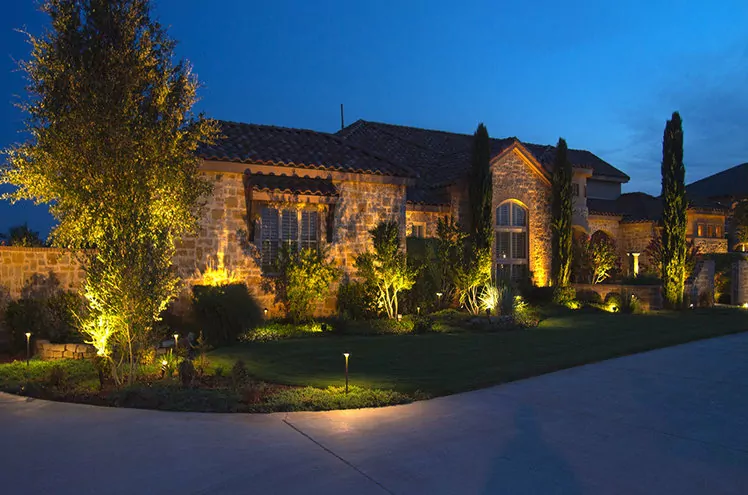
Daytime landscaping turns heads—but what about after dark? If your home disappears once the sun sets, it’s time to consider the power of landscape lighting. A thoughtful, professionally designed lighting system does more than illuminate pathways—it brings out the best in your property’s architecture, garden, and overall ambiance.
At Salas Services, we help homeowners throughout the DFW Metroplex and surrounding areas craft outdoor lighting designs that turn ordinary exteriors into evening masterpieces. Whether you’re starting fresh or refining an existing setup, here are the top design tips to help you maximize your home’s curb appeal.
One of the most effective ways to elevate curb appeal is by creating layers of light. This includes:
Layering these elements gives your landscape a dynamic, balanced look that draws the eye without overwhelming it.
Strategically placed lighting draws attention to what makes your property unique. Consider:
The goal is to showcase—not wash out—your home’s best features.
More light isn’t always better. Overlighting can create glare, flatten textures, and even reduce visibility. Focus on:
Properly placed fixtures should enhance your space, not mimic a stadium.
Lighting your entryways does double duty—it improves security while also boosting visual appeal. Prioritize:
A well-lit entrance feels inviting and communicates a sense of care and attention to detail.
Color temperature affects mood. Use:
Our experts at Salas Services help you select the right lighting tone to match your home’s style.
Your outdoor lighting system must endure Texas weather. Always choose:
We use high-quality, long-lasting materials that hold up year after year with minimal maintenance.
Even the best lighting system can lose its charm if not maintained. Be sure to:
We offer landscape lighting maintenance services to keep your system performing beautifully in every season.

Here are the most common questions client’s usually have for us. Still have more questions? Contact Us.
Yes, we offer emergency tree removal services for situations such as storm damage, fallen trees, or hazardous trees posing an immediate risk. Contact us at [phone number] as soon as possible in case of emergencies, and our team will prioritize your situation.
We can assist you with the process of obtaining permits for tree removal, if required. The need for permits varies based on local regulations and tree preservation ordinances. Our team will guide you through the necessary steps and provide any documentation or information needed for the permit application.
While trees are generally low-maintenance, certain signs indicate the need for professional intervention. Watch out for symptoms such as extensive dead or dying branches, sudden leaf loss, significant pest infestation, leaning or unstable tree structure, or visible signs of disease or decay. If you notice any of these issues, it's best to consult with our skilled arborists.
Several signs indicate that a tree may need to be removed, including significant structural damage, extensive disease or pest infestation, severe leaning, extensive root damage, or proximity to power lines or structures. Our professional arborists can assess the tree's health and safety to determine if removal is necessary.
The frequency of tree trimming or pruning depends on various factors such as tree species, age, and overall health. As a general guideline, it is recommended to have trees pruned every 3-5 years to maintain their shape, promote healthy growth, and remove any hazardous or dead branches.
The ideal time to plant new trees depends on the tree species and climate. In general, spring and fall are the preferred seasons for tree planting as the weather conditions are more favorable for root establishment. However, it's best to consult with our experts who can provide guidance based on your specific location and tree species.

Can’t find the answer you’re looking for? Please chat with our friendly team.


Transform your landscape with our expert tree and lighting services. Our skilled team creates captivating outdoor spaces that radiate beauty and invite enjoyment.
