

get in touch
-32232.png)
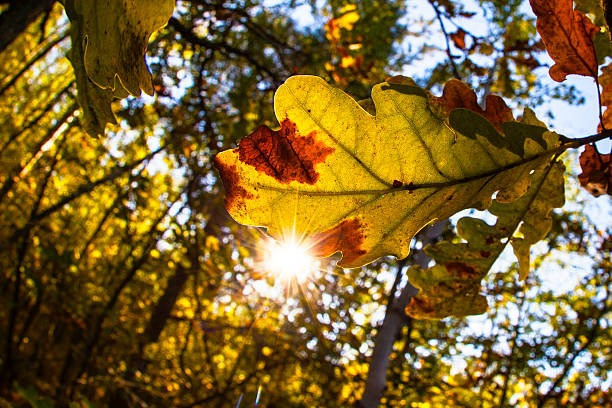
If you have oak trees on your Dallas-Fort Worth property — and chances are you do — oak wilt is the single most important tree health issue you need to understand. It is one of the most destructive tree diseases in the entire state of Texas, and the DFW Metroplex is squarely in its path.
Oak wilt kills trees fast, spreads silently through underground root systems, and has no cure once a tree is fully infected. But here is the critical part: oak wilt is largely preventable. The homeowners who lose their oaks to this disease are almost always the ones who did not know the rules — or who hired a tree service that did not follow them.
At Salas Services, we have been caring for oak trees across the Dallas-Fort Worth Metroplex for over 30 years. Oak wilt prevention is not optional in our line of work — it is built into everything we do. This guide will tell you exactly what oak wilt is, how it spreads, what the warning signs look like, and what you can do right now to protect your trees.
Oak wilt is a fungal disease caused by the pathogen Bretziella fagacearum. Once the fungus enters an oak tree, it invades the tree's vascular system — the network of channels that carry water and nutrients from the roots up through the trunk and into the canopy. As the fungus colonizes the vascular system, it physically blocks water movement. The tree slowly starves from the top down, unable to deliver what it needs to survive.
There is no cure for a tree that is fully infected with oak wilt. Prevention and early intervention are the only tools available to DFW homeowners.
Oak wilt is present across multiple counties in the DFW Metroplex and has been steadily spreading through North Texas neighborhoods for decades. The disease kills hundreds of thousands of oak trees in Texas every year, and in areas where mature oaks are planted close together — like most established DFW neighborhoods — a single infected tree can trigger a chain reaction that destroys an entire block of trees.
Understanding how oak wilt spreads is the key to preventing it. The disease moves in two primary ways — and both are common in the Dallas-Fort Worth area:
Sap beetles — small insects attracted to the scent of freshly cut wood and tree sap — are the primary above-ground carriers of the oak wilt fungus. When a beetle visits a tree that has been infected and then flies to a healthy tree with an open wound — a fresh pruning cut, a storm wound, a lawnmower scrape — it can deposit the fungus directly into the healthy tree's vascular system.
This is why the timing of tree trimming is so critical for oak trees in DFW. Sap beetles are most active between February 1st and June 30th. Any pruning cut or wound made to an oak tree during this window is an open invitation for oak wilt infection. A single improper trim during peak sap beetle season can infect a perfectly healthy tree — and from there the disease can spread to every connected oak on your property.
Oak trees that are planted close together — as they often are in established DFW neighborhoods — frequently develop interconnected root systems through a process called root grafting. Once oak wilt enters one tree in a connected group, the fungus can travel underground through these shared root connections at a rate of 75 to 100 feet per year.
This underground spread is what makes oak wilt so devastating in neighborhood settings. A single infected tree can silently infect every connected oak on the block — and by the time symptoms appear in the neighboring trees, the fungus has already been spreading underground for months.
Not all oaks respond to oak wilt the same way. DFW homeowners need to understand which species they have and how the disease affects each one:
Red Oaks (including Shumard Red Oak)
Red oaks are the most susceptible species in North Texas. Once infected, a red oak can die within weeks — sometimes as fast as two to four weeks from the first appearance of symptoms. The rapid collapse leaves almost no window for intervention. If you have a red oak in the DFW area, prevention is absolutely critical.
Live Oaks
Live oaks are also highly susceptible to oak wilt, but the disease progresses more slowly than in red oaks. An infected live oak typically declines over several months to a few years. This slower progression can actually make the disease harder to detect early — homeowners often attribute the gradual thinning canopy to drought stress or other causes, giving the fungus more time to spread underground to neighboring trees.
Post Oaks and White Oaks
Post oaks and white oaks in the DFW area are less susceptible to oak wilt than red oaks and live oaks, but they are not immune. Fort Worth updated its Urban Forestry Ordinance in 2025 specifically to strengthen protections for post oaks, reflecting how valuable and increasingly threatened these trees are across Tarrant County.
Catching oak wilt early gives you the best chance of protecting surrounding trees even when the infected tree cannot be saved. Here are the key warning signs:
Browning or Bronzing of Leaves Starting at the Tips and Edges
One of the earliest visible signs of oak wilt is leaf discoloration that starts at the outer edges and tips of leaves and works inward. The leaves may turn bronze, brown, or a dull yellow-green before dropping.
Vein Banding in Live Oak Leaves
Live oaks infected with oak wilt often show a distinctive pattern called vein banding — the leaf veins themselves turn brown or yellow while the tissue between them initially stays green, creating a mottled, watercolor-like pattern. This is a hallmark symptom of oak wilt in live oaks specifically.
Rapid, Unexplained Leaf Drop
If your oak tree is dropping leaves heavily outside of its normal seasonal pattern — especially during spring or summer — oak wilt may be the cause. Red oaks in particular can go from full canopy to completely bare in a matter of weeks when infected.
Rapid Spread to Nearby Trees
If oaks near an affected tree begin showing similar symptoms within weeks or months, underground root-to-root transmission is likely occurring. This is a situation that requires immediate professional attention.
The good news is that oak wilt is highly preventable when homeowners follow the right protocols consistently. Here is what every DFW homeowner with oak trees needs to do:
Follow the Safe Trimming Window — No Exceptions
Never trim oak trees between February 1st and June 30th. This is the period when sap beetles are most active and the risk of above-ground oak wilt transmission is at its highest. The safe trimming window for oaks in DFW is July through January, with November through January being the lowest-risk period.
Paint Every Cut Immediately
Any wound on an oak tree — whether from pruning, storm damage, or accidental damage — should be sealed immediately with a pruning paint or wound sealant. The goal is to close the wound before sap beetles can detect the fresh-cut scent and arrive. This applies year-round, but is especially critical during the high-risk season.
Sanitize Trimming Tools Between Trees
The oak wilt fungus can be transported on pruning tools from an infected tree to a healthy one. Any tree service working on your oaks should sanitize their tools with a bleach solution or isopropyl alcohol between every tree. If a tree service does not do this automatically, find one that does.
Do Not Transport Oak Firewood From Infected Areas
Oak wilt can spread through freshly cut, infected oak wood. Never bring oak firewood from an area with known oak wilt into your yard, and never transport it out of an infected area into a clean one.
Consider Preventive Fungicide Treatments for High-Value Trees
If you have a large, mature live oak that would be devastating to lose — and whose root system likely connects to other oaks on your property — preventive fungicide injection using propiconazole (Alamo) is an option worth discussing with a tree care professional. Fungicide treatments do not cure oak wilt, but they can slow progression and help protect trees that are adjacent to infected ones.
If you see symptoms that suggest oak wilt on any of your trees, do not wait. The faster you act, the better chance you have of protecting your remaining trees.
Contact a professional tree service experienced with oak wilt in the Dallas-Fort Worth area. A proper oak wilt assessment considers the species of tree, the pattern of symptoms, the proximity to other oaks, and whether underground spread may already be occurring. In many cases, creating a root barrier — a trench cut between infected and healthy trees that disrupts the underground root connections — can stop below-ground spread before it reaches neighboring trees.
Infected trees that have died or are beyond saving should be removed and the wood handled properly to prevent the development of spore mats that can spread the fungus further above ground.
At Salas Services, oak wilt prevention is not something we think about after the fact. It is built into every tree trimming job we perform across the Dallas-Fort Worth Metroplex. We follow the safe trimming window, we seal every cut, we sanitize our tools, and we know how to identify the early signs of oak wilt before they become a neighborhood-wide problem.
With over 30 years of experience caring for North Texas trees, Salas Services is the team DFW homeowners trust to treat their oaks with the care and knowledge these trees deserve.

Here are the most common questions client’s usually have for us. Still have more questions? Contact Us.
Yes, we offer emergency tree removal services for situations such as storm damage, fallen trees, or hazardous trees posing an immediate risk. Contact us at [phone number] as soon as possible in case of emergencies, and our team will prioritize your situation.
We can assist you with the process of obtaining permits for tree removal, if required. The need for permits varies based on local regulations and tree preservation ordinances. Our team will guide you through the necessary steps and provide any documentation or information needed for the permit application.
While trees are generally low-maintenance, certain signs indicate the need for professional intervention. Watch out for symptoms such as extensive dead or dying branches, sudden leaf loss, significant pest infestation, leaning or unstable tree structure, or visible signs of disease or decay. If you notice any of these issues, it's best to consult with our skilled arborists.
Several signs indicate that a tree may need to be removed, including significant structural damage, extensive disease or pest infestation, severe leaning, extensive root damage, or proximity to power lines or structures. Our professional arborists can assess the tree's health and safety to determine if removal is necessary.
The frequency of tree trimming or pruning depends on various factors such as tree species, age, and overall health. As a general guideline, it is recommended to have trees pruned every 3-5 years to maintain their shape, promote healthy growth, and remove any hazardous or dead branches.
The ideal time to plant new trees depends on the tree species and climate. In general, spring and fall are the preferred seasons for tree planting as the weather conditions are more favorable for root establishment. However, it's best to consult with our experts who can provide guidance based on your specific location and tree species.

Can’t find the answer you’re looking for? Please chat with our friendly team.


Transform your landscape with our expert tree and lighting services. Our skilled team creates captivating outdoor spaces that radiate beauty and invite enjoyment.
