

get in touch
-32232.png)
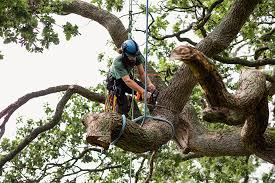
Trees are one of the best things about owning a home in the Dallas-Fort Worth area. They provide shade during brutal Texas summers, add curb appeal, and can increase your property value. But there comes a point in every tree's life when keeping it around becomes more of a risk than a reward.
Knowing when tree removal is the right call — and who to trust with the job — is something every DFW homeowner should understand. At Salas Services, we have been handling tree removal across the Dallas-Fort Worth Metroplex for over 30 years. This guide will walk you through everything you need to know: the warning signs, the process, what it costs, and how to protect your property every step of the way.
North Texas weather is tough on trees. Scorching summer heat, severe spring thunderstorms, unexpected ice storms, and diseases like oak wilt put serious stress on the trees in your yard year after year. A tree that looked healthy last spring can deteriorate quickly — and in the DFW Metroplex, a falling tree is not just a yard problem. It is a safety hazard that can damage your roof, your fence, your vehicle, or injure someone on your property.
Texas law is also clear: if you have a dead or diseased tree on your property and it falls and damages a neighbor's home or vehicle, you can be held liable. Removing a dangerous tree is not just about your home — it is about protecting everyone around you.
The good news is that professional tree removal in DFW does not have to be stressful. With the right company, the process is safe, efficient, and leaves your yard looking clean and ready for what comes next.
Not every tree that looks rough needs to come down. But there are specific warning signs that tell you a tree has crossed the line from struggling to dangerous. Here is what to watch for:
1. The Tree Is Dead or Dying
A dead tree is a liability. Dead wood loses its structural integrity over time, meaning it can break and fall with no warning — during a storm or on a perfectly calm day. Signs of a dead or dying tree include bare branches when other trees are leafed out, brittle bark that falls off easily, and no new growth after spring.
2. The Trunk Has Deep Cracks or Hollow Sections
A trunk with large cracks, splits, or hollow cavities has compromised structural integrity. These are not cosmetic issues — they indicate internal decay that weakens the tree from the inside out. A hollow trunk cannot support the weight of large branches, especially during a DFW storm.
3. The Tree Is Leaning More Than Usual
A slight natural lean is normal for many trees. But if a tree has begun to lean noticeably — especially if you can see the roots lifting out of the ground on one side — that is a serious warning sign. A leaning tree with exposed or damaged roots is at high risk of uprooting in a windstorm.
4. Fungal Growth at the Base of the Tree
Mushrooms or shelf fungi growing at the base or on the trunk of a tree indicate internal rot. Fungal growth means the tree's root system or internal structure is decaying. Once rot reaches this stage, the tree is often beyond saving and needs to be removed before it falls on its own terms.
5. The Tree Has Been Severely Damaged by a Storm
DFW is no stranger to powerful spring storms. If a tree has had major limbs torn off, the trunk has split, or more than 50 percent of the canopy was lost in a storm, the tree's long-term survival is unlikely. A severely damaged tree also becomes structurally unpredictable — what is left standing can fall at any point.
6. The Tree Is Infested With Disease or Pests
Oak wilt, hypoxylon canker, and emerald ash borer infestations are serious problems in the Dallas-Fort Worth area. When a tree is too far gone from disease or pest damage, removal is the responsible choice. Leaving an infected tree standing can allow the disease to spread to healthy trees on your property and your neighbors' properties.
7. The Roots Are Damaging Your Foundation, Driveway, or Sewer Lines
Some trees are simply planted in the wrong place. If the root system is lifting your driveway, cracking your foundation, or intruding on underground sewer or water lines, the long-term cost of keeping the tree outweighs any benefit. Tree removal in this situation protects your home's structural integrity.
This is one of the most common questions homeowners ask before scheduling tree removal in the Dallas-Fort Worth area — and the answer depends on where you live.
City of Dallas: Single-family or duplex homeowners on properties under 2 acres generally do not need a permit to remove non-protected trees. However, removing a protected tree — typically one 6 inches or larger in diameter at breast height — may require a permit and replacement planting under Article X of the Dallas landscape ordinance.
City of Fort Worth: Fort Worth updated its Urban Forestry Ordinance in April 2025 with stronger protections for trees including post oaks and blackjack oaks. Permits are now required for trees 6 inches DBH and larger, especially on properties with building permits involved.
Other DFW Cities: Plano, Frisco, McKinney, Southlake, and many HOA-governed neighborhoods all have their own tree protection rules. Always check with your city or HOA before scheduling a removal.
At Salas Services, we are familiar with tree removal requirements across the Dallas-Fort Worth Metroplex and can help you understand what applies to your property before any work begins.
Many homeowners are nervous about the tree removal process because they are not sure what it involves or how long it will take. Here is what a professional tree removal looks like from start to finish with Salas Services:
Step 1 — Free Same-Day Estimate
We come to your property, assess the tree, identify any access challenges, and give you a clear written estimate. No surprise charges, no pressure.
Step 2 — Planning the Removal
Before a single cut is made, our crew evaluates the safest direction for the tree to fall, identifies any structures or obstacles nearby, and plans the removal sequence. Proper planning is what separates a professional tree removal from a dangerous one.
Step 3 — Removal
Depending on the size and location of the tree, we use a combination of sectional cutting, rigging, and equipment to bring the tree down safely. Large trees near homes, fences, or power lines require careful sectional removal from the top down rather than a single fell.
Step 4 — Cleanup
When the tree is down, we do not leave until your yard is clean. All branches, wood, and debris are removed. You will not be left with a pile of logs and brush in your yard.
Step 5 — Stump Options
Tree removal does not automatically include stump removal. Once the tree is down, you can choose to leave the stump, have it ground down, or have it fully removed. We will walk you through the options and recommend what makes the most sense for your yard.
At Salas Services, we do not recommend tree removal unless it is truly necessary. Before committing to a removal, it is worth asking whether the tree can be saved with the right treatment. In some cases, the answer is yes.
Tree trimming and structural pruning can extend the life of a tree that is struggling with storm damage or uneven growth. Cabling and bracing can stabilize a tree with a split trunk or codominant stems. Pest and disease treatments can sometimes reverse infestations that have not progressed too far.
That said, there are situations where no amount of treatment will make a tree safe again. Our team will give you an honest assessment. If the tree can be saved, we will tell you. If removal is the safest option, we will explain exactly why.
When you are hiring someone to remove a large tree from your property, experience and trust matter more than anything else. Salas Services has been serving Dallas-Fort Worth homeowners for over 30 years, completing more than 2,000 projects across the Metroplex with a 5.0 Google rating.
Here is what sets us apart:
We serve homeowners throughout the DFW Metroplex including Irving, Arlington, Grand Prairie, Grapevine, Coppell, and surrounding areas.

Here are the most common questions client’s usually have for us. Still have more questions? Contact Us.
Yes, we offer emergency tree removal services for situations such as storm damage, fallen trees, or hazardous trees posing an immediate risk. Contact us at [phone number] as soon as possible in case of emergencies, and our team will prioritize your situation.
We can assist you with the process of obtaining permits for tree removal, if required. The need for permits varies based on local regulations and tree preservation ordinances. Our team will guide you through the necessary steps and provide any documentation or information needed for the permit application.
While trees are generally low-maintenance, certain signs indicate the need for professional intervention. Watch out for symptoms such as extensive dead or dying branches, sudden leaf loss, significant pest infestation, leaning or unstable tree structure, or visible signs of disease or decay. If you notice any of these issues, it's best to consult with our skilled arborists.
Several signs indicate that a tree may need to be removed, including significant structural damage, extensive disease or pest infestation, severe leaning, extensive root damage, or proximity to power lines or structures. Our professional arborists can assess the tree's health and safety to determine if removal is necessary.
The frequency of tree trimming or pruning depends on various factors such as tree species, age, and overall health. As a general guideline, it is recommended to have trees pruned every 3-5 years to maintain their shape, promote healthy growth, and remove any hazardous or dead branches.
The ideal time to plant new trees depends on the tree species and climate. In general, spring and fall are the preferred seasons for tree planting as the weather conditions are more favorable for root establishment. However, it's best to consult with our experts who can provide guidance based on your specific location and tree species.

Can’t find the answer you’re looking for? Please chat with our friendly team.


Transform your landscape with our expert tree and lighting services. Our skilled team creates captivating outdoor spaces that radiate beauty and invite enjoyment.
